

Stop Blaming AI
The Real Disruption Is Already Happening.

Every major media company has a version of the same headline right now. AI is coming for your job. The robots are here. The disruption is upon us.
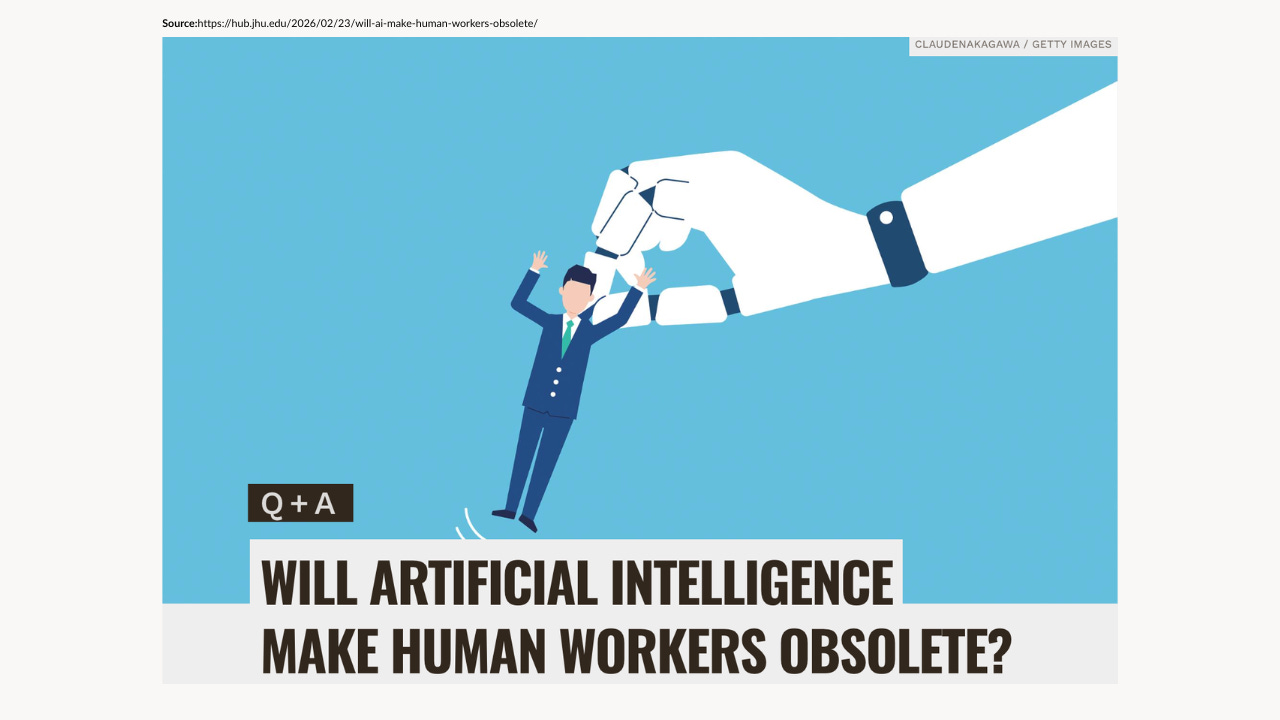
I think they’re looking at the wrong thing.
The real disruption is quieter. I’m calling it quiet restructuring. And it’s already happening inside every company you respect.
This week I interviewed two candidates for a Chief of Staff role. One based in Mexico. One in Brazil. The conversation I had with each of them — about vision, about standards, about what we’re building and why it matters — was the same conversation I’d have with anyone sitting across from me. Geography was the last thing on my mind.
I built Kinship Ventures with talent from Venezuela, Canada, the United States, Europe, the Philippines, and the Middle East. My team runs fund administration, operations, due diligence, account management, FP&A, marketing, creative, content, copy, and design. The full stack of a functioning venture firm, distributed across the world. They are some of the strongest operators I’ve ever worked with.
Hiring globally is about choices. The best person for the job is whoever is actually the best person for the job. That pool just got a lot bigger. And the founders who figured that out first have a head start most of their competitors don’t realize exists.
Companies like Activate Talent, Deel and Trolley.AI made this operationally real. Activate Talent surfaces people I would never have found through the channels I historically relied on. Deel handles payments, compliance, and contracts across jurisdictions. Trolley.AI handles the operational execution layer, on top of that is what Granola, Notion and Wispr AI. AI do for how a distributed team actually operates — how information moves, how context stays alive across time zones — and the old constraints start to look like habits, not requirements.
The best operators I know are building where the talent lives.
Being together still matters. The whiteboard’s and walking meeting’s and offsites are still gold. The best teams protect those moments and still prioritize time together but i think the era of atonomy is here
What changed is the default. The assumption that proximity is a qualification rather than a choice. That your team needs to be near you to be excellent.
The leaders building well right now are doing both. Distributed by design. Together on purpose. Autonomy as the baseline, presence as the investment.
quiet restructuring | kwī-ət rē-ˈstrək-chər-iŋ | noun
The gradual expansion of where founders are willing to look for talent, and what they find when they actually look.
A slow realization, happening across companies simultaneously, that the assumption baked into every job description — that the right person is within commuting distance of a major market — was never really a qualification. It was a habit built from 2019.
What I’m watching: founders discovering exceptional operators in Nashville and Salt Lake City and Columbus. Designers in Brazil. Financial minds in Caracas and Bogotá. Engineers anywhere. The talent was never concentrated in five zip codes. We just hired like it was.
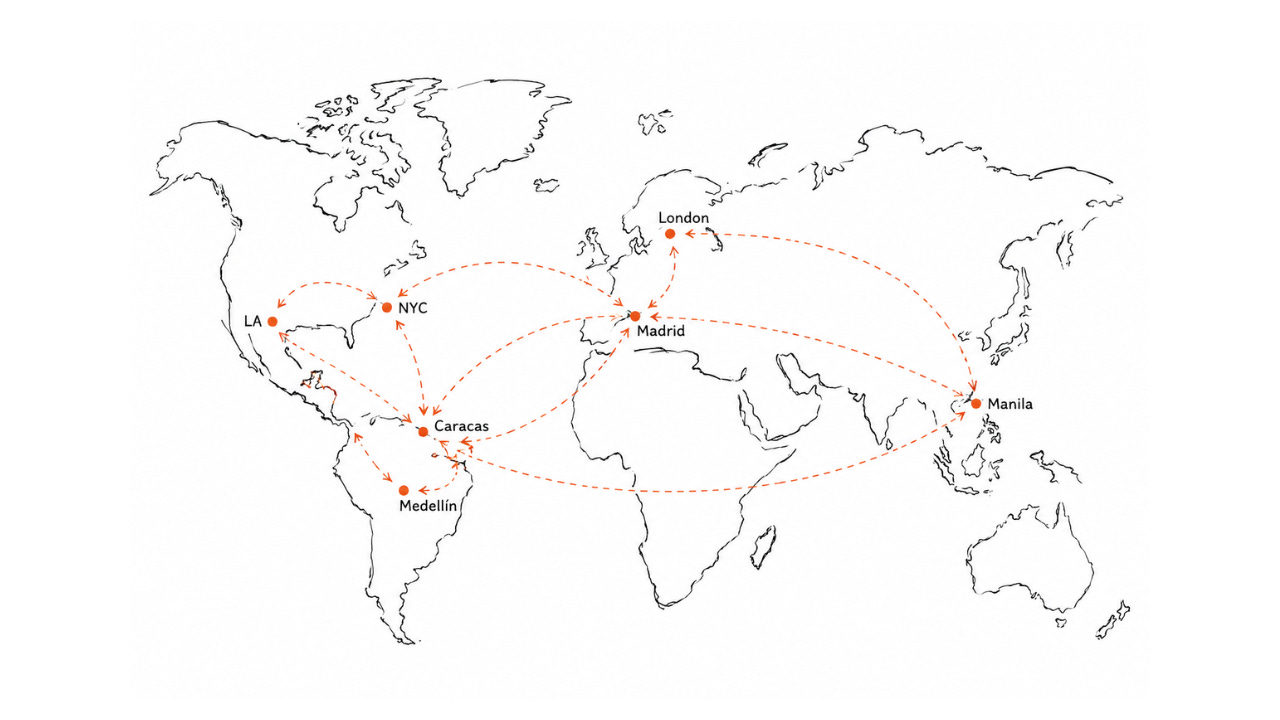
The companies I’m most excited about right now don’t start their search with a city. They start with a question: who is actually the best person for this, and where are they? The answer keeps coming back from places the old model would have filtered out before the first conversation.
This is what’s quietly changing. Not with fanfare. Just with better teams.
Enabled by: Activate Talent, Deel, Granola, Notion, Wispr AI.
Distinguished from a trend by its staying power. Once you’ve hired this way, you can’t unhire this way.
See also: leverage, access, the talent that was always there.
You’re Not Burned Out. You’re Carrying Cognitive Debt.
Last week I introduced cognitive debt. The accumulated cost of thinking you chose not to do. Decisions unmade. Loops nobody closed. The drag that looks like burnout but doesn’t get better with rest.
There’s something that feeds cognitive debt that almost never gets named.
Context shifting.
Not multitasking — that’s the shallow version of the problem. Context shifting is the tax paid every time you have to become a different thinker inside the same 24 hours.
The venture capital mind and the operations mind are not the same instrument. The founder negotiating a partnership deal and the founder managing a team through uncertainty are not accessing the same instincts. Each context has its own vocabulary, its own logic, its own version of what matters. Moving between them isn’t seamless. It’s expensive.
Every shift costs something. Attention. Precision. The kind of focus that only shows up when you’ve been inside one problem long enough to see what’s actually there.
I recently pushed a trip back by two weeks because I knew I wasn’t actually tired. I was carrying too many unfinished decisions, too many open loops, too many things that still needed clarity. I knew I could get on a plane. I also knew those things would get on the plane with me. Because unfinished things follow you. The unclear decision is still unclear. The ownership gap is still there. The process is still broken.
What looked like an energy problem was a clarity problem.
The founders who move fastest aren’t the ones doing the most. They’re the ones who’ve protected enough consecutive time inside a single context to actually think.
The calendar is a mirror. Look at yours.
context shifting | ˈkän-tekst ˈshif-tiŋ | noun
The cognitive cost of moving between fundamentally different mental models inside the same day.
The tax paid every time a person doing the work of four different executives has to become a different thinker inside the same 24 hours.
Accumulates invisibly. Each individual shift feels manageable. The nineteenth shift in a week does not.
Characterized by: present everywhere, focused nowhere. Decisions that feel harder than they should. Work that used to take an hour taking three. The specific exhaustion of someone who has been thinking hard all day and has almost nothing to show for it.
Often misdiagnosed as burnout. Treated with rest. Unchanged by rest.
The actual fix: protected consecutive time inside a single context. Enough runway to stop switching and start seeing.
Feeds directly into: cognitive debt, decision fatigue, the Excellence trap.
Antonym: deep work. Flow. The long uninterrupted morning nobody schedules anymore.
Women and AI. Let’s Name What’s Actually Happening.
My friend Sophia Amoruso wrote something this week I haven’t been able to stop thinking about. Her post on AI reached 2.3 million people. 93% of the audience was women. Women who are curious, paying attention, and looking for someone to show them how this actually works — not in a TED talk, not in a tech bro thread on X, but in a life that looks something like theirs.
Go read it. She’s saying things that need to be said.
Here’s what the data shows. Harvard synthesized 18 studies covering 140,000 people worldwide. Women are adopting AI at 25% lower rates than men. Not because of ability. Because men are 27% more likely to be praised at work for using it. Women are 23% less likely to get manager support to even try. Only 38% of junior women see AI reskilling as critical to their future, compared to 53% of men. The jobs most at risk of automation — customer service, admin, data entry — are the ones women dominate.
Here’s what’s actually happening underneath that.
Women’s adoption tripled last year. Men’s doubled. The gap is closing and women are closing it faster than anyone expected. The women who are in it are running circles around everyone else.
And the response has been punishment. Women who are visible in AI — who post about it, who build in it, who invest in it — are getting hit. Loudly. The comment that says you’re killing the earth. The reply that questions your credentials. The particular flavor of anger reserved for women who show up early in spaces that were assumed to belong to someone else.
That’s worth naming directly. It’s real. It’s a pattern. And it’s a crime against the exact people who should be leading this.
The angry ones are always louder than the ones who need it. But the ones who needed it are paying attention. And there are millions of them.
What I’m Building and Why I Write This.
I invest in things before the market understands them. OpenAI three and a half years ago. Lovable before most people believed AI could ship real products. Goop Kitchen — three million orders, ghost kitchen model, now expanding across New York. Most people look at that and see a restaurant. I look at it and see a distribution system that figured out how to separate the brand from the building entirely.
Kinship Opportunity Fund bets across the full range of what AI is becoming — consumer, food, the infrastructure underneath how companies actually run. The places where the category hasn’t been named yet. That’s where I want to be. Before the name exists.
I write this because I’m inside things most people read about afterward. I build teams from Venezuela to the Philippines because excellence doesn’t have a zip code. I run AI across my own life — my inbox, my meetings, my fund — not as an experiment but as infrastructure. And I keep building rooms where founders who are actually doing the work can think out loud together, because that room didn’t exist when I needed it.
One more thing: A surprising number of you have reached out recently asking some version of the same question: What actually matters in AI right now? What’s noise? And how do I think about it in a way that’s useful to my work?
Most people don’t need another list of tools. They need better frameworks. Better judgment. A clearer understanding of where AI creates leverage and where it doesn’t.
So I’m putting together a small mentorship experience for founders, operators, executives, and marketers who want to go deeper. More focused on judgment, workflows, and practical application.
We have 10% capacity left and I know it will sell out so If you’d like to hear more, join the waitlist below.
For Marjane.
Marjane Satrapi died this week. She was 56. Her family said she died of sadness — more than a year after losing her husband, the love of her life. An artist who spent her life turning grief and displacement into something the whole world could understand, and at the end, sadness was the word her people chose.
She was one of the most influential Iranian artists of our time. Author of Persepolis. Filmmaker. Illustrator. Storyteller. She helped millions understand Iran through the lives of its people rather than through the lens of politics. Her work captured the humor, complexity, resilience, and heartbreak of being Iranian in the aftermath of revolution and exile.
As an Iranian-American, I’ve always felt conflicted by the way parts of the Western world engage with Iran. They celebrate our poetry, our films, our artists, our resilience, our resistance. They admire the beauty that emerged from suffering. Too few stop to ask why so many of those artists, writers, thinkers, entrepreneurs, and dreamers were forced to create from exile in the first place.
Millions of Iranians did not dream of becoming a diaspora.
We dreamed of staying home.
We dreamed of building companies in Tehran, making films in Shiraz, creating art in Isfahan, raising our families, caring for our parents, and contributing to the country we loved. Instead, generations of Iranians were forced to choose between freedom and home.
The world celebrates the extraordinary achievements of Iranians abroad — and it should. But those achievements are also evidence of a profound loss. Reminders of what Iran itself was denied.
When Marjane Satrapi speaks about sadness, I understand.
There is a particular grief in watching the world applaud the resilience of a people while failing to fully reckon with the conditions that made that resilience necessary.
The tragedy is not that Iranians succeeded despite everything.
The tragedy is how much more they could have contributed had they been free to flourish in their own country.
Imagine Marjane Satrapi’s talent, brilliance, and voice in a free Iran. Then imagine the millions more like her.
That is the loss.
I’ll keep telling you what I find.
#MarjaneSatrapi #Persepolis #Iran #WomanLifeFreedom
— Moj